






Not, as James Travers says, the government of the day.
Perhaps it is simply imprecise word choice on his part, or lack of expanding on his statement, but these lines do not help people understand the non-partisan nature of the public service, nor why it is necessary to respect that the public service serves the public, not the elected government:
Certainly the government of the day has every right to expect bureaucrat loyalty.
No, it doesn’t. While it is the duty of the public service to forward government’s will as directed by the Minister in charge (with the exception of the independent agencies who do not have a Minsiter), it is not a question of loyalty. They serve Canada and Canadians, and must fulfill the elected government’s orders within the boundaries of their mandates and as directed by existing legislation which defines the responsibilities of an independent public service.
It would be more accurate to say that the government of the day has every right to expect bureaucrat cooperation and respect for the acts outlining the responsibilities of public servants.
For the public service, it is not at all (and should never be) an issue of loyalty, but of a committment and dedication to following the rules by which they are bound, regardless of who holds the most seats in Parliament. These rules and acts were developed by all of Parliament, over many, many sessions. They are regularly updated and adjusted as public needs change. Never should they be altered to accommodate the goals of a particular party in power.
If the public service was expected to shift loyalties to accommodate elected governments, there would be no stability in the public service and long term planning would be a waste of time.
Travers is also incorrect in what he says about the rights of Prime Ministers when it comes to public servants:
Prime ministers have as much right to set their administration's tone as they have to expect the bureaucracy to execute government's will.
The statement is a little vague, saying that one right is equal to the other, without really defining the range of those rights, but implying that they are considerable.
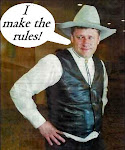
Yes, the Prime Minister does have some leeway in setting the tone in departments, but once more, existing policies limit that right to safeguard against any PM using public services to forward their own political agendas. We have already seen many cases of abuse of such policies, especially with the harper government - using public service sites to launch attack ads, changing the look of departmental sites so that they appear clones of the CPC ones, ignoring Treasury Board guidelines and introducing terms such as Harper’s Government rather than the Government of Canada.
After all, democracy demands that mandarins advise, ministers decide. Still, enforced silence and reflex compliance are anathemas to the openness and intellectual argy-bargy that are essential to the creation of effective policies that put the nation on the most beneficial course.
Yes. Travers is correct on that point. And by clouding the accountability and the independence of the public service by saying the government of the day has every right to expect (its) loyalty, Travers feeds the very thing he decries: enforced silence and reflex compliance would be the result of loyalty to governments of the day.
Showing posts with label travers. Show all posts
Showing posts with label travers. Show all posts
Tuesday, February 23, 2010


Saturday, December 19, 2009
Thank you, Ralph Surette
Two related articles came out today on how Harper is destroying our democracy - one by James Travers, and one by Ralph Surette.
Both bring out similar concerns:
Indeed, the Harper government merely gets worse: more controlling, angry, manipulative, contemptuous of Parliament, more suspicious of its own civil service - and more incompetent, in its Bush/Cheney way, on anything touching foreign affairs. It also represents a minority of Canadians. - Surette
Coldly cynical and conveniently effective, the advantage tilts dramatically to the ruling party. Sharing only favourable factoids and fearing no challenge from an opposition frozen outside the loop, Harper, sounding like a U.S. president, speaks directly to the people over the heads of MPs, Parliament and, should the need arise - as it did during the coalition crisis - even the Governor General.
We are witnessing institutions crumbling under the weight of assumed personal power. After decades of whittling away the principles, precedents and even laws limiting their manoeuvring room, prime ministers are now free to do as they please, at least until voters next make their mark. - Travers
Both provide examples of Harper`s contempt of Parliament, and his refusal to be open and transparent with the public.
However, Travers and Surette come to different conclusions.
Out there, where the undecided and skeptics are kept at arm's length, Ottawa's secrecy culture isn't a kitchen table worry. Out there it would be rude to ask when the buck last stopped at a minister, how civil servants became fall guys or how watchdogs lost their bark. Out there, if Conservatives have it figured right, the manipulation of an inconvenient Parliament will slide by with the same ease as the piece-by-piece deconstruction of democracy. - Travers
The "issue of governance" is how to get rid of it - and what to replace it with. Although the Harper government has managed repeatedly to work its way up to the 40 per cent range in the polls, considered majority country by the pollsters, as soon as the cameras focus on that fact, something blows up and the lead sinks like a stone. The problem is that when the cameras turn to the Liberals, they sink like a stone as well...The Liberals will have another shot at it at the next election. If they fail again, then something will really have to be done. Enough international humiliation and enough scorpions. - Surette
Travers seems to have already buried the public`s ability to play their role in a democracy and force chage, while Surette fans our angry embers, telling us with his closing words that something will have to be done if the politicians don`t oust this abominable government. There is little question that Surette is calling to us, the citizens of Canada.
That`s good journalism. Respect for readers, not afraid to shake us up, not afraid to opposr government.
The turning point in events such as the French revolution that lead to commoners gathering together and fighting injustice was the invention of the press. Information was able to reach many, and the corrupt leaders did not control those running the presses. The writers of the releases understood their role not only to inform the public and making them aware of corruption, but to remind them of their role in shaping their own fate and that of their country.
So, thank you, Ralph Surette. We need more of this to remind all Canadians that it`s not ``rude to ask when the buck last stopped at a minister, how civil servants became fall guys or how watchdogs lost their bark,`` and that we have the power to stop ``the manipulation of an inconvenient Parliament (sliding) by with the same ease as the piece-by-piece deconstruction of democracy."
Both bring out similar concerns:
Indeed, the Harper government merely gets worse: more controlling, angry, manipulative, contemptuous of Parliament, more suspicious of its own civil service - and more incompetent, in its Bush/Cheney way, on anything touching foreign affairs. It also represents a minority of Canadians. - Surette
Coldly cynical and conveniently effective, the advantage tilts dramatically to the ruling party. Sharing only favourable factoids and fearing no challenge from an opposition frozen outside the loop, Harper, sounding like a U.S. president, speaks directly to the people over the heads of MPs, Parliament and, should the need arise - as it did during the coalition crisis - even the Governor General.
We are witnessing institutions crumbling under the weight of assumed personal power. After decades of whittling away the principles, precedents and even laws limiting their manoeuvring room, prime ministers are now free to do as they please, at least until voters next make their mark. - Travers
Both provide examples of Harper`s contempt of Parliament, and his refusal to be open and transparent with the public.
However, Travers and Surette come to different conclusions.
Out there, where the undecided and skeptics are kept at arm's length, Ottawa's secrecy culture isn't a kitchen table worry. Out there it would be rude to ask when the buck last stopped at a minister, how civil servants became fall guys or how watchdogs lost their bark. Out there, if Conservatives have it figured right, the manipulation of an inconvenient Parliament will slide by with the same ease as the piece-by-piece deconstruction of democracy. - Travers
The "issue of governance" is how to get rid of it - and what to replace it with. Although the Harper government has managed repeatedly to work its way up to the 40 per cent range in the polls, considered majority country by the pollsters, as soon as the cameras focus on that fact, something blows up and the lead sinks like a stone. The problem is that when the cameras turn to the Liberals, they sink like a stone as well...The Liberals will have another shot at it at the next election. If they fail again, then something will really have to be done. Enough international humiliation and enough scorpions. - Surette
Travers seems to have already buried the public`s ability to play their role in a democracy and force chage, while Surette fans our angry embers, telling us with his closing words that something will have to be done if the politicians don`t oust this abominable government. There is little question that Surette is calling to us, the citizens of Canada.
That`s good journalism. Respect for readers, not afraid to shake us up, not afraid to opposr government.
The turning point in events such as the French revolution that lead to commoners gathering together and fighting injustice was the invention of the press. Information was able to reach many, and the corrupt leaders did not control those running the presses. The writers of the releases understood their role not only to inform the public and making them aware of corruption, but to remind them of their role in shaping their own fate and that of their country.
So, thank you, Ralph Surette. We need more of this to remind all Canadians that it`s not ``rude to ask when the buck last stopped at a minister, how civil servants became fall guys or how watchdogs lost their bark,`` and that we have the power to stop ``the manipulation of an inconvenient Parliament (sliding) by with the same ease as the piece-by-piece deconstruction of democracy."
Subscribe to:
Posts (Atom)